EN
 Türkçe
 Русский

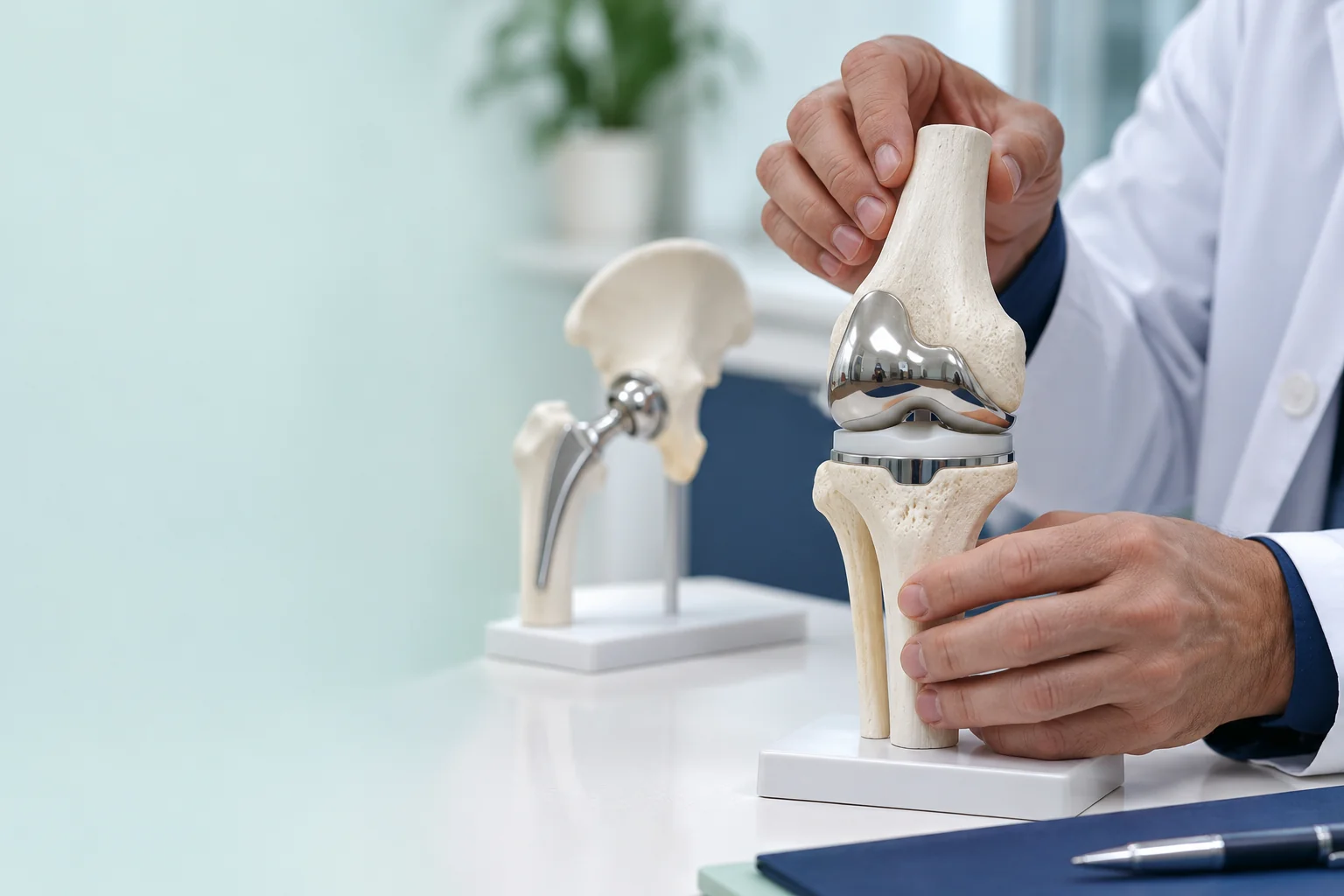
Gonarthrosis, or knee arthritis as it is commonly known, is a condition that is accompanied by serious pain when it reaches an advanced stage. The most common complaints of our patients who experience this condition, accompanied by pain, are restriction of their movements, inability to sleep at night due to pain, weight gain due to decreased movement, and significant restriction of their daily lives. For patients where these symptoms have started and are severe, the most effective treatment method today is total knee prosthesis.
Although knee prosthesis surgery is a procedure that we have been performing for a very long time, it is a surgery that has very successful results and the majority of patients are satisfied with the results, especially since much better and higher quality prostheses are produced with the developing technology in recent years and the experience of us surgeons in this field has increased significantly.

For the surgery to be successful; Choosing the right material used and placing the correct size of the prostheses in the most appropriate way and with the correct technique are as important as carrying out the post-operative process correctly.
After knee replacement surgery, the most difficult time for the patient is; It is usually the first 24 hours after surgery. This period is relieved with the most appropriate pain treatment in the inpatient service. Afterwards, each day is usually better than the last.

Cold therapy is started on the knee when the patient returns to the ward. This is intended to reduce swelling and bleeding within the knee and help relieve pain.
Patients can generally bear weight on the operated leg after knee replacement. During the first few days, a walker is used to provide balance while they become accustomed to the new knee implant. Walking usually becomes noticeably easier within a few days.
One of the most important duties for patients in this process is to do the exercises shown to them completely and in large numbers (https://profdrsarpergursu.com/site/kalca-ve-diz-protezleri-sonrasinda-ne-tur-egzersizler-yapmaiyorum/49). It is of great importance that the patient performs exercises properly to ensure range of motion in the joints and strengthen the knee. When exercises are performed in appropriate quantities and correctly, it is often not necessary to seek professional physical therapy and rehabilitation help.

After the surgery, dressing should be done every 2 days under sterile conditions. At the end of the second week, the wound is checked by the doctor performing the surgery and the stitches are removed. The patient should not wet his wound until the stitches are removed. Therefore, one should either not take a bath or, if necessary, use waterproof wound dressings. You can take a bath 24 hours after the stitches are removed.
It is very important to use the prescribed medications in the prescribed doses and for the desired duration when discharged from the hospital. Among these, the injection we call low molecular weight heparin, generally known as a blood thinner, must be used without interruption for 3 weeks. During this process, it is generally recommended that the patient wear compression stockings that extend to the hips on both legs.
The first postoperative outpatient review takes place at 4–6 weeks. Two-view X-rays taken at this visit allow the implant to be assessed.
By the end of the 6th week after knee prosthesis, functional recovery is usually achieved almost completely. However, 2-3 months is a suitable period for full recovery.
Get well soon.
Dr. Sarper GÜRSU
October 2024
Istanbul
*This article provides general information and does not replace your doctor’s recommendations.