
 EN
 Türkçe
 Русский
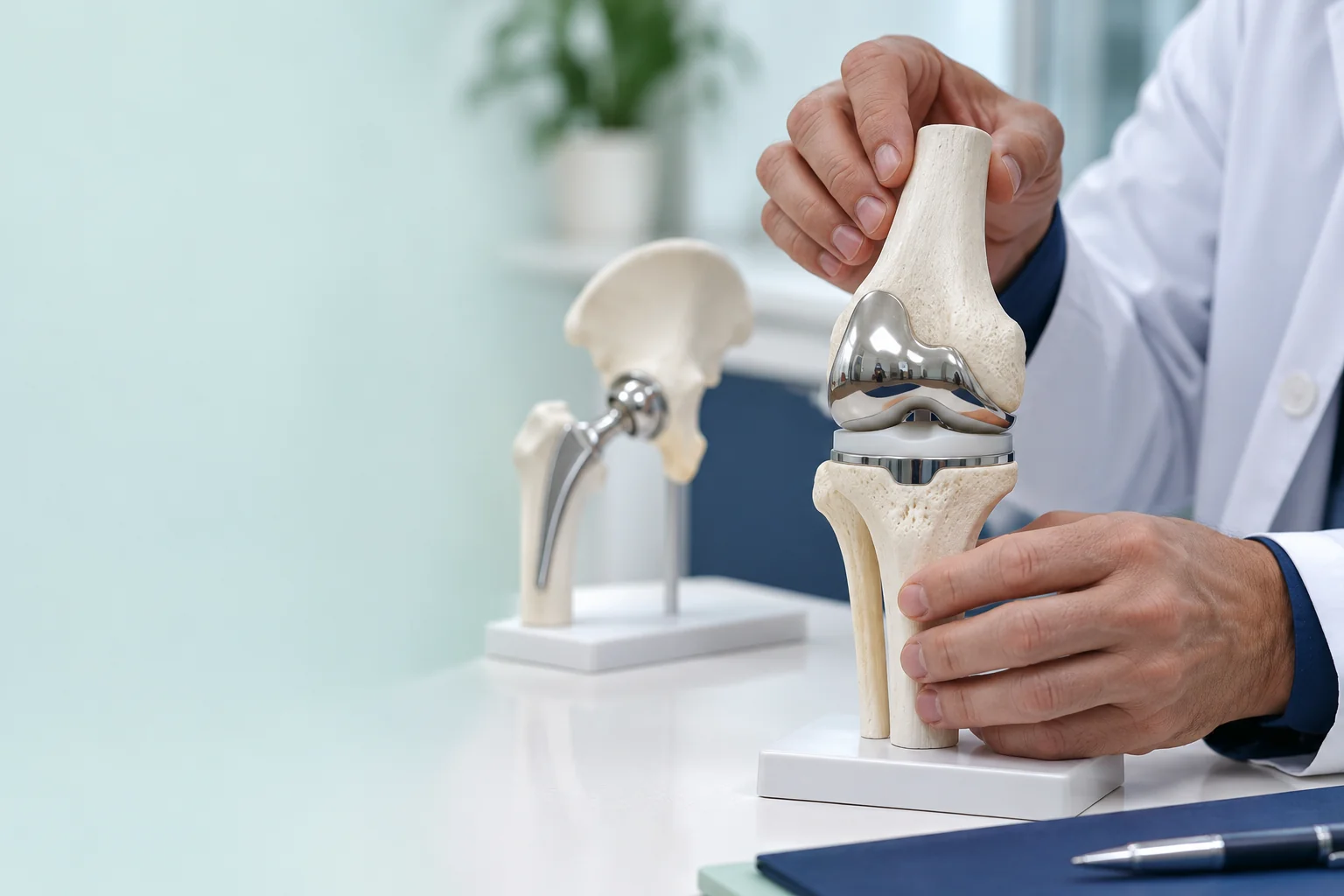
Total hip replacement, or more commonly known as hip prosthesis, is one of the most successful treatment methods in relieving pain caused by severe deterioration of the hip joint for various reasons.
Hip prosthesis, which is preferred in cases where the cartilage covering the hip joint surfaces is damaged and in patients where non-surgical treatment methods cannot relieve the pain, is a procedure based on the principle of replacing the joint surfaces with artificial surfaces.
Who should have a hip replacement?
Hip prosthesis can be applied to patients who have pain due to advanced cartilage degeneration in the hip joint, whose pain may occur while resting or sleeping, whose pain is not relieved by non-surgical methods, and whose daily life has begun to be restricted.
Nowadays; There is no age or weight limit in hip replacement procedures. However, in younger patients, all non-prosthetic methods should be exhausted. In addition, it is known that obesity, that is, excess weight, negatively affects prosthesis surgery and the postoperative period, especially the rehabilitation process. There are also opinions that it shortens the lifespan of the prosthesis.
What are the parts of hip prostheses?
The implants used in total hip replacement have three basic components: the acetabular cup placed in the socket, the stem placed in the femur, and an insert that reduces friction and contributes to movement between the two components.
In some surgeries, other parts may be required in addition to these basic 3 parts. When placing prostheses in the joint, materials such as screws or bone cement can be used, depending on the situation.
What are the types of hip prostheses?
With technological developments, the number of implants that can be used in hip replacement surgeries is increasing and offering a wide range of opportunities to patients and surgeons. The materials from which hip prostheses are produced vary widely, such as cobalt/chromium/molybdenum, oxynium, zirconium and ceramics; The choice between these types varies depending on the patient’s age, expectations, lifestyle, hip anatomy and the degree of degeneration in the joint. All these factors should be taken into consideration when determining which type of implant will be used for which patient and the choice should be made together with the patient.
What should be considered after hip replacement?
- Regular and hygienic wound care should be performed.
- Conditions that can lead to infection of the joint prosthesis, such as a dental abscess or urinary tract infection, should be treated promptly.
- Follow the doctor’s instructions on weight-bearing through the operated leg, the exercise programme and restoring the joint’s range of motion.
- Recommended movement restrictions should be followed in the early period.
- The medications prescribed by the surgeon should be used completely and for the recommended periods.